
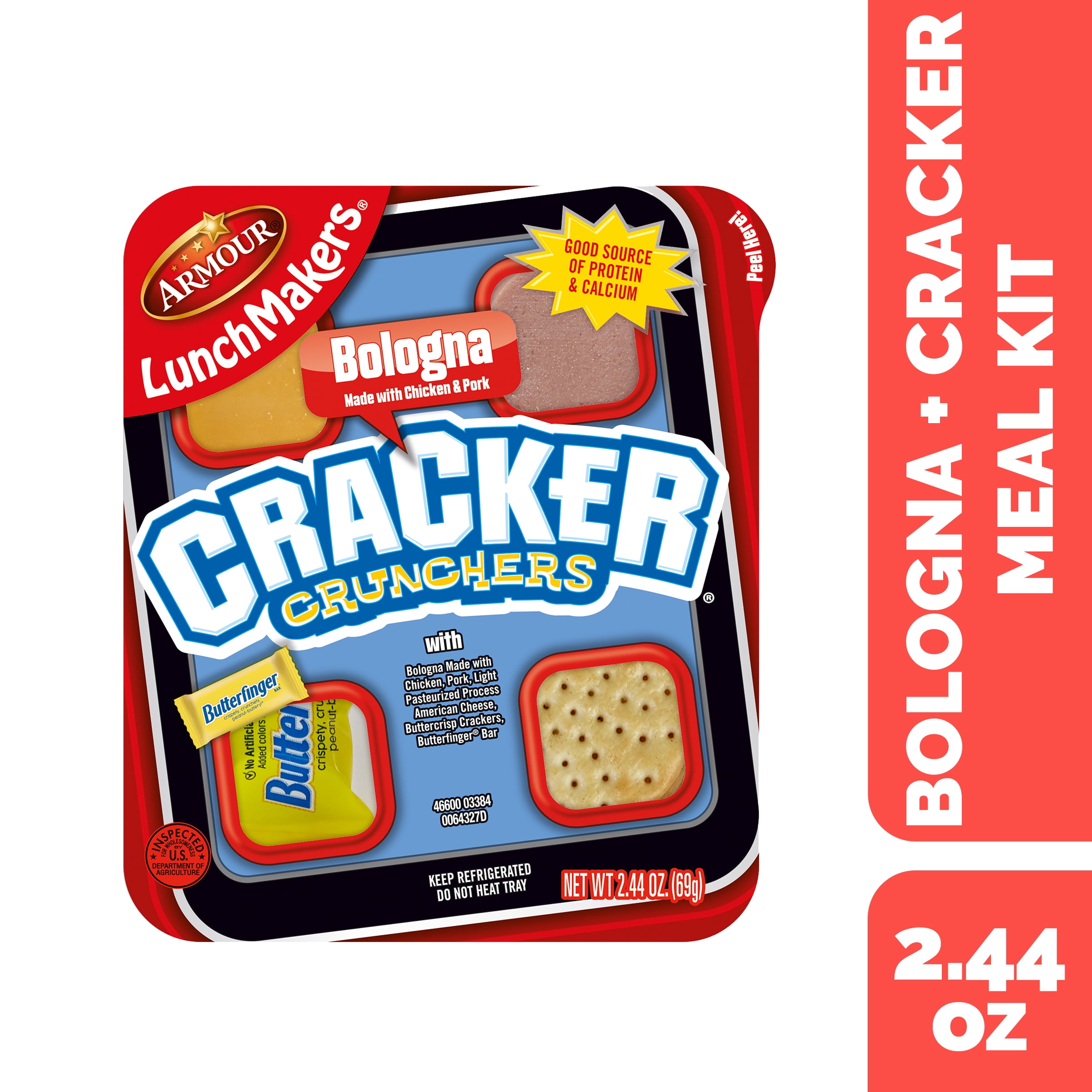
Is Armour LunchMakers Bologna Cracker Crunchers with Nestle Butterfinger Bar Alpha-Gal Friendly?
Scan products instantly
500K+ users • 4.6★ rating


Free download • No credit card
Scan products instantly
500K+ users • 4.6★ rating
Free download • No credit card
Ingredients
Bologna Made with Chicken, Turkey, Pork: Poultry Ingredients (Mechanically Separated Chicken, Mechanically Separated Turkey), Pork, Water, Corn Syrup, Modified Food Starch, Dextrose, Salt, Contains 2% or Less of Beef, Extract of Paprika, Flavorings, Potassium Lactate, Sodium Diacetate, Sodium Lactate, Sodium Nitrite, Sodium Phosphate, Vitamin C (Ascorbic Acid). Light Pasteurized Process American Cheese: Milk, Water, Milk Protein Concentrate (Ingredient Not in Regular Pasteurized Process American Cheese), Whey (Ingredient Not in Regular Pasteurized Process American Cheese), Cheese Culture, Modified Food Starch (Ingredient Not in Regular Pasteurized Process American Cheese), Sodium Citrate, Salt, Skim Milk (Ingredient Not in Regular Pasteurized Process American Cheese), Lactic Acid, Potassium Citrate, Sorbic Acid(Preservative), Sodium Phosphate, Cream, Color Added, Tetra Sodium Pyrophosphate, Enzymes. Buttercrisp Crackers: Enriched Flour (Wheat Flour, Niacin, Reduced Iron, Thiamine Mononitrate [Vitamin B1], Riboflavin [Vitamin B2] Folic Acid), Vegetable Oil (Partially Hydrogenated Soybean, Canola, and/or Cottonseed Oil with TBHQ for Freshness), Sugar, Contains 2% or Less of Salt, Corn Syrup, Leavening (Baking Soda, Sodium Acid Pyrophosphate, Monocalcium Phosphate), Butter (Cream, Salt), Soy Lecithin. Nestle Butterfinger Bar: Corn Syrup, Sugar, Ground Roasted Peanuts, Hydrogenated Palm Kernel Oil, Cocoa, Molasses, Less Than 1% of Whey, Confectioner's Corn Flakes, Nonfat Milk, Salt, Lactic Acid Esters, Soy Lecithin, Soybean Oil, Corn Starch, Artificial Flavors, TBHQ and Citric Acid (to Preserve Freshness), Yellow 5, Red 40.
What is a Alpha-Gal Friendly diet?
An Alpha-Gal diet eliminates mammalian meat and products containing mammalian-derived ingredients to prevent allergic reactions in people with alpha-gal syndrome. This includes beef, pork, lamb, dairy products, gelatin, and certain medications derived from mammals. The condition involves a specific sugar molecule found in most mammals, often triggered after a tick bite. People may experience delayed allergic reactions 3-6 hours after consuming trigger foods. The diet focuses on safe alternatives like poultry, fish, and plant-based proteins. When followed carefully, often with guidance from an allergist or dietitian, it can prevent serious reactions while maintaining adequate nutrition.
Explore other diets
Often paired with Alpha-Gal Friendly
Similar Products
Bar S Classic Bologna Made With Chicken, Pork Added
Armour Lunchmakers Chips, Salsa & Cheese Nachos, With Nerds
Armour LunchMakers Ham & Crackers Portable Meal Kit with Crunch Bar, 2.4 oz
Nestle Mickey's Premium Vanilla Ice Cream Bar With Chocolatey Coating, Vanilla
Armour LunchMakers Chicken& Crackers Portable Meal Kit with Crunch Bar, 2.4 oz
Where to buy
Armour LunchMakers Bologna Cracker Crunchers with Nestle Butterfinger Bar is available at 6 retailers
About this product
Snack · Cracker, Bar