
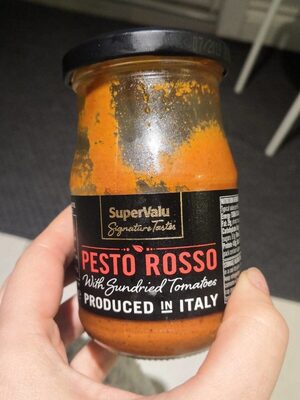
Is Pesto Rosso Vegetarian?
Scan products instantly
500K+ users • 4.6★ rating


Free download • No credit card
Why it's a maybe for vegetarian
- rennet
- lactic acid
rennet
Dietitian noteRennet, sometimes shown on labels as rennin, is an enzyme used to thicken milk in the cheesemaking process. Rennet can be derived from animal and non-animal sources. Animal rennet is derived from the stomach lining of baby mammals, typical unweaned calves.

Note by Rhyan Geiger, RDN
Every flagged ingredient, explained
Notes and swaps for all 2 flagged ingredients, plus vegetarian products to buy instead.
Scan products instantly
500K+ users • 4.6★ rating
Free download • No credit card
Ingredients
Double Concentrated Tomato, Extra Virgin Olive Oil (27%), Tomato Pulp, Rehydrated Sundried Tomatoes [Sundried Tomatoes (5.6%), Tomato, Salt, Acidity Regulator (Citric Acid), Antioxidant (Ascorbic Acid)], Sugar, Acidity Regulator (Lactic Acid), Antioxidant (Ascorbic Acid), Pickled Garlic, Basil, Pecorino Romano Medium Hard Fat Cheese (2.5%) [Ewes Milk, Salt, Rennet], Pine Nuts (2%), Parmigiano Reggiano Medium Hard Fat Cheese [Milk, Salt, Rennet], Sugar, Salt, Acidity Regulator (Lactic Acid), Chilli Powder, Antioxidant (Ascorbic Acid)
Check Pesto Rosso against your own diets in the app.
Take it with you
Scan to open Pesto Rosso in Spoonful
Point your phone camera at the code, the app opens right on this product with its results against 26 diets, allergies and intolerances.


What is a Vegetarian diet?
A vegetarian diet eliminates meat, poultry, and fish but typically includes dairy, eggs, and plant-based foods. People adopt it for ethical, environmental, or health reasons. This diet emphasizes fruits, vegetables, legumes, grains, nuts, and seeds as key nutrient sources. Vegetarians often get protein from eggs, tofu, beans, and lentils. It can offer health benefits such as reduced risk of heart disease and improved weight management, though attention should be given to nutrients like iron, zinc, and vitamin B12. With proper planning, a vegetarian diet can be both nutritionally complete and sustainable.