
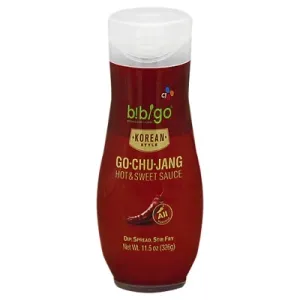
Is Bibigo Korean Gochujang Sauce Hot & Sweet 11.46 oz Vegetarian?
Description
Korean hot-and-sweet sauce delivers a balanced spicy-sweet flavor with savory depth, a thick glossy texture that clings to food, and smooth spreadability. Commonly used as a marinade, dipping sauce, glaze, or stir‑in for rice, noodles, tacos and wings. Reviews cite versatile flavor, satisfying heat level, and dense consistency and convenience.
Scan products instantly
500K+ users • 4.6★ rating


Free download • No credit card
Description
Korean hot-and-sweet sauce delivers a balanced spicy-sweet flavor with savory depth, a thick glossy texture that clings to food, and smooth spreadability. Commonly used as a marinade, dipping sauce, glaze, or stir‑in for rice, noodles, tacos and wings. Reviews cite versatile flavor, satisfying heat level, and dense consistency and convenience.
Scan products instantly
500K+ users • 4.6★ rating
Free download • No credit card
Ingredients
Hot Pepper Base {Hot Pepper Paste (Brown Sugar, Water, Wheat Flour, Red Pepper Powder, Soy Sauce (Defatted Soybean, Wheat, Salt Koji, Water), Salt, Onion Puree, Defatted Soybean Powder, Citric Acid, Koji), Onion Puree, Water, Chopped Garlic, Brown Sugar, Cooking Rice Wine, Red Pepper Powder, Xanthan Gum}, Sugar, Distilled Vinegar, Soy Sauce (Water, Wheat, Soybeans, Salt, Alcohol), Salted Sake (Water, Rice, Koji, Salt), Salt, Yeast Extract, Oleoresin Capsicum.
Check Bibigo Korean Gochujang Sauce Hot & Sweet 11.46 oz against your own diets in the app.
Take it with you
Scan to open Bibigo Korean Gochujang Sauce Hot & Sweet 11.46 oz in Spoonful
Point your phone camera at the code, the app opens right on this product with its results against 26 diets, allergies and intolerances.


What is a Vegetarian diet?
A vegetarian diet eliminates meat, poultry, and fish but typically includes dairy, eggs, and plant-based foods. People adopt it for ethical, environmental, or health reasons. This diet emphasizes fruits, vegetables, legumes, grains, nuts, and seeds as key nutrient sources. Vegetarians often get protein from eggs, tofu, beans, and lentils. It can offer health benefits such as reduced risk of heart disease and improved weight management, though attention should be given to nutrients like iron, zinc, and vitamin B12. With proper planning, a vegetarian diet can be both nutritionally complete and sustainable.
Explore other diets
Often paired with Vegetarian
This product may or may not be vegan as it lists 1 ingredient that could derive from animals depending on the source. We recommend contacting the manufacturer directly to confirm.
Details →Yes! We believe this product is dairy free as there are no dairy ingredients listed on the label.
Details →Similar Products
Where to buy
Bibigo Korean Gochujang Sauce Hot & Sweet 11.46 oz is available at 9 retailers
About this product
Sauce · Bottle