
Is Goldbears Gummy Candies Share Size Vegan?
Description
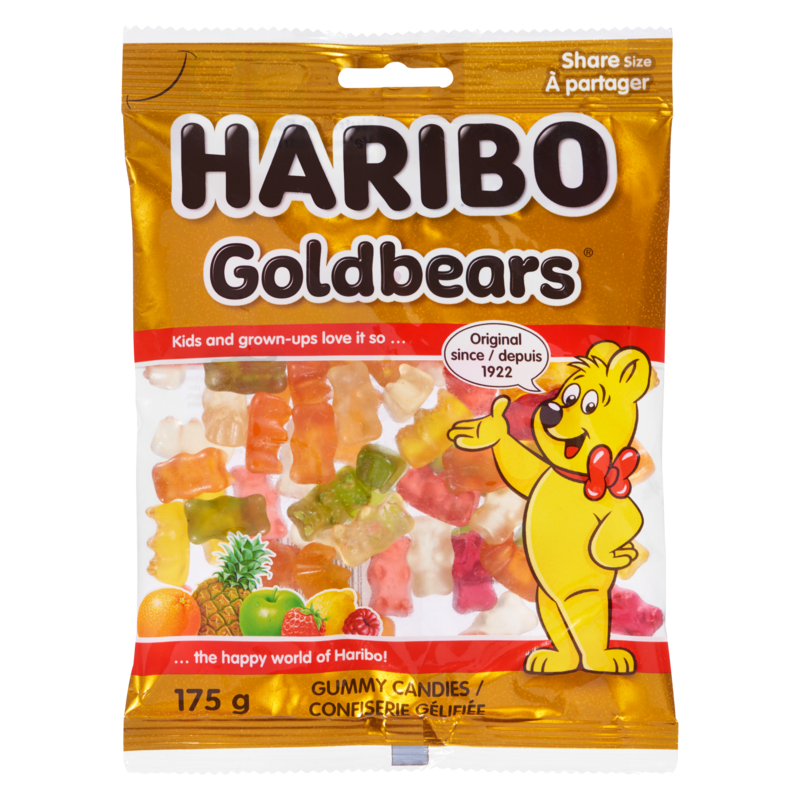
HARIBO Goldbears are a type of fruit gums that come in five fruity flavors: Lemon, Orange, Pineapple, Raspberry, and Strawberry. With 100 calories per serving, they are a perfect snack for sharing or decorating desserts. HARIBO Goldbears are made by a sweets company that started in Germany in 1920 by Hans Riegel. After his death during World War II, his son took over and expanded Haribo's operations, acquiring local confectionery manufacturers worldwide. Today, HARIBO has five factories in Germany, 13 European factories, and sales offices in almost every European country, as well as offices in the United States.
Scan products instantly
500K+ users • 4.6★ rating


Free download • No credit card
Why it's not vegan
- gelatin water fruit juices from concentrate
- sunflower oil artificial flavours beeswax
- dextrose
gelatin water fruit juices from concentrate
Dietitian noteGelatin comes from the skin, cartilage, and bones of animals.
Note by Rhyan Geiger, RDN
Keep checking with Spoonful
Explore available ingredient explanations and check other groceries against your dietary needs.
Description
HARIBO Goldbears are a type of fruit gums that come in five fruity flavors: Lemon, Orange, Pineapple, Raspberry, and Strawberry. With 100 calories per serving, they are a perfect snack for sharing or decorating desserts. HARIBO Goldbears are made by a sweets company that started in Germany in 1920 by Hans Riegel. After his death during World War II, his son took over and expanded Haribo's operations, acquiring local confectionery manufacturers worldwide. Today, HARIBO has five factories in Germany, 13 European factories, and sales offices in almost every European country, as well as offices in the United States.
Scan products instantly
500K+ users • 4.6★ rating
Free download • No credit card
Ingredients
Sugars (sugar, Glucose Syrup, Dextrose) • Gelatin • Water • Fruit Juices From Concentrate (apple Juice From Concentrate, Raspberry Juice From Concentrate, Strawberry Juice From Concentrate, Orange Juice From Concentrate, Lemon Juice From Concentrate, Pineapple Juice From Concentrate) • Citric Acid • Fruit And Plant Concentrates (carrot Concentrate, Apple Concentrate, Radish Concentrate, Spirulina Concentrate, Paprika Concentrate, Hibiscus Concentrate, Blackcurrant Concentrate, Tomato Concentrate) • Sunflower Oil • Artificial Flavours • Beeswax. May Contain Milk • Wheat.
Check Goldbears Gummy Candies Share Size against your own diets in the app.
Take it with you
Scan to open Goldbears Gummy Candies Share Size in Spoonful
Point your phone camera at the code, the app opens right on this product with its results against 26 diets, allergies and intolerances.


What is a Vegan diet?
A vegan diet excludes all animal-derived foods, including meat, poultry, fish, dairy, eggs, and honey. It focuses on plant-based sources such as fruits, vegetables, grains, legumes, nuts, and seeds. Many people choose veganism for ethical, environmental, or health reasons. When well-planned, it provides sufficient protein, fiber, and antioxidants, though supplementation or fortified foods may be needed for nutrients like vitamin B12, iron, and omega-3 fatty acids. Vegan diets are associated with lower risks of heart disease and improved digestion but require mindfulness to ensure balanced and complete nutrition.
Explore other diets
Often paired with Vegan
No. This product is not vegetarian as it lists 1 ingredient that derives from meat or fish and 1 ingredient that could could derive from meat or fish depending on the source.
Details →Yes! We believe this product is dairy free as there are no dairy ingredients listed on the label.
Details →Similar Products
Alexia Foods Crispy Bite-Size Sweet Potato Puffs 20oz Bag
Tostitos Scoops! Tortilla Chips, Party Size, 14.5 oz Bag
Cheerios Whole Grain Oats Gluten Free Breakfast Cereal Large Size
Lawry's Original Seasoned Salt Shaker, Economy Size, 16 oz
Honey Nut Cheerios Whole Grain Oats Gluten Free Breakfast Cereal Large Size
Where to buy
Goldbears Gummy Candies Share Size is available at 1 retailer
About this product
Candy · Candy Piece