
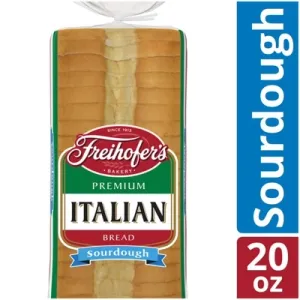
Is ITALIAN SOURDOUGH PREMIUM BREAD, ITALIAN SOURDOUGH Gluten Free?
Description
Rustic, mildly tangy flavor complements a crisp, golden crust and open, chewy crumb; texture holds up to slicing and toasting. Commonly used for sandwiches, bruschetta, and panini or served alongside soups and salads. Reviewers note reliable oven-spring and flavor, with occasional inconsistency in loaf size or freshness and packaging variability.
Scan products instantly
500K+ users • 4.6★ rating


Free download • No credit card
Description
Rustic, mildly tangy flavor complements a crisp, golden crust and open, chewy crumb; texture holds up to slicing and toasting. Commonly used for sandwiches, bruschetta, and panini or served alongside soups and salads. Reviewers note reliable oven-spring and flavor, with occasional inconsistency in loaf size or freshness and packaging variability.
Scan products instantly
500K+ users • 4.6★ rating
Free download • No credit card
Ingredients
Enriched Wheat Flour (Flour, Malted Barley Flour, Reduced Iron, Niacin, Thiamin Mononitrate (Vitamin B1), Riboflavin (Vitamin B2), Folic Acid), Water, Yeast, Salt, Soybean Oil, Sugar, Grain Vinegar, Wheat Gluten, Monoglycerides, Calcium Propionate, Rye Flour, Calcium Sulfate, Datem, Soy Lecithin, Fumaric Acid, Ground Caraway, Citric Acid, Ground Dill Seed, Acetic Acid, Lactic Acid, Hydrogenated Soybean Oil, Potassium Iodate, Natural Flavor
Check ITALIAN SOURDOUGH PREMIUM BREAD, ITALIAN SOURDOUGH against your own diets in the app.
Take it with you
Scan to open ITALIAN SOURDOUGH PREMIUM BREAD, ITALIAN SOURDOUGH in Spoonful
Point your phone camera at the code, the app opens right on this product with its results against 26 diets, allergies and intolerances.


What is a Gluten Free diet?
A gluten-free diet excludes all foods containing gluten, a protein found in wheat, barley, rye, and their derivatives. It's essential for people with celiac disease, gluten intolerance, or wheat allergy, as consuming gluten can trigger inflammation and digestive issues. Common gluten-containing foods include bread, pasta, cereals, and baked goods, though many gluten-free alternatives now exist using rice, corn, or almond flour. Beyond medical necessity, some people choose a gluten-free lifestyle for perceived health benefits, though experts emphasize the importance of maintaining a balanced diet rich in fiber, vitamins, and minerals when eliminating gluten-containing grains.
Explore other diets
Often paired with Gluten Free
Yes! We believe this product is dairy free as there are no dairy ingredients listed on the label.
Details →No. This product is not low FODMAP as it lists 1 ingredient that is likely high FODMAP at 1 serving and 3 ingredients that could be moderate or high FODMAP depending on source or serving size.
Details →Similar Products
Where to buy
ITALIAN SOURDOUGH PREMIUM BREAD, ITALIAN SOURDOUGH is available at 1 retailer
About this product
Bread · Loaf