
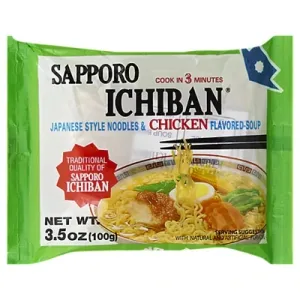
Is Sapporo Ichiban Sapporo Ichiban Japanese Style Noodles & Chicken Flavored-Soup Gluten Free?
Description
Instant Japanese-style noodles deliver a firm, springy texture and a savory, umami-forward broth. Commonly prepared as a quick single-serve meal or customized with add-ins. Reviewers praise consistent flavor, easy preparation, and noodle quality; some note strong seasoning and preference for added toppings and portability for lunches, often mentioned by reviewers.
Scan products instantly
500K+ users • 4.6★ rating


Free download • No credit card
Description
Instant Japanese-style noodles deliver a firm, springy texture and a savory, umami-forward broth. Commonly prepared as a quick single-serve meal or customized with add-ins. Reviewers praise consistent flavor, easy preparation, and noodle quality; some note strong seasoning and preference for added toppings and portability for lunches, often mentioned by reviewers.
Scan products instantly
500K+ users • 4.6★ rating
Free download • No credit card
Ingredients
Oriental Noodles 3,19Oz: Enriched Wheat Flour (Flour, Niacin, Iron, Thiamine Mononitrate, Riboflavin), Palm Oil, Potato Starch, Salt, Guar Gum, Sodium Carbonate And Potassium Carbonate, Soup Base 0,31Oz: Salt, Monosodium Glutamate, Sugar, Onion Powder, Hydrolyzed Plant Protein (Hydrolyzed Corn Gluten, Soy Protein And Wheat Gluten, Partially Hydrogenated Soybean And Cottonseed Oil), Non Dairy Creamer (Corn Syrup Solids, Partially Hydrogenated Soybean Oil, Sodium Caseinate, Mono And Diglycerides, Dipotassium Phosphate, Silicon Dioxide, Soy Lecithin, Artificial Flavor, Annatto And Turmeric), Maltodextrin, Hydrolyzed Gelatin, Leek Chips, White Pepper, Lactose, Autolyzed Yeast Extract, Garlic Powder, Disodium Inosinate, Disodium Guanylate, Artificial Flavor, Turmeric Powder, Celery Powder, Sodium Citrate, Citric Acid, Red Pepper And Corn Oil, With Artificial Flavors
What is a Gluten Free diet?
A gluten-free diet excludes all foods containing gluten, a protein found in wheat, barley, rye, and their derivatives. It's essential for people with celiac disease, gluten intolerance, or wheat allergy, as consuming gluten can trigger inflammation and digestive issues. Common gluten-containing foods include bread, pasta, cereals, and baked goods, though many gluten-free alternatives now exist using rice, corn, or almond flour. Beyond medical necessity, some people choose a gluten-free lifestyle for perceived health benefits, though experts emphasize the importance of maintaining a balanced diet rich in fiber, vitamins, and minerals when eliminating gluten-containing grains.
Explore other diets
Often paired with Gluten Free
No. This product is not dairy free as it lists 1 ingredient that contains dairy.
Details →No. This product is not low FODMAP as it lists 3 ingredients that are likely high FODMAP at 1 serving and 5 ingredients that could be moderate or high FODMAP depending on source or serving size.
Details →Similar Products
Where to buy
Sapporo Ichiban Sapporo Ichiban Japanese Style Noodles & Chicken Flavored-Soup is available at 15 retailers
About this product
Soup · Dried