
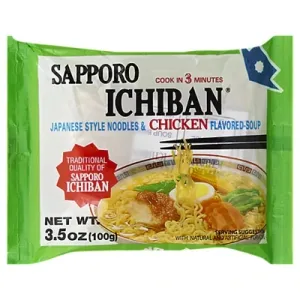
Is Sapporo Ichiban Sapporo Ichiban Japanese Style Noodles & Chicken Flavored-Soup Vegan?
Description
Instant Japanese-style noodles deliver a firm, springy texture and a savory, umami-forward broth. Commonly prepared as a quick single-serve meal or customized with add-ins. Reviewers praise consistent flavor, easy preparation, and noodle quality; some note strong seasoning and preference for added toppings and portability for lunches, often mentioned by reviewers.
Scan products instantly
500K+ users • 4.6★ rating


Free download • No credit card
Description
Instant Japanese-style noodles deliver a firm, springy texture and a savory, umami-forward broth. Commonly prepared as a quick single-serve meal or customized with add-ins. Reviewers praise consistent flavor, easy preparation, and noodle quality; some note strong seasoning and preference for added toppings and portability for lunches, often mentioned by reviewers.
Scan products instantly
500K+ users • 4.6★ rating
Free download • No credit card
Ingredients
Oriental Noodles 3,19Oz: Enriched Wheat Flour (Flour, Niacin, Iron, Thiamine Mononitrate, Riboflavin), Palm Oil, Potato Starch, Salt, Guar Gum, Sodium Carbonate And Potassium Carbonate, Soup Base 0,31Oz: Salt, Monosodium Glutamate, Sugar, Onion Powder, Hydrolyzed Plant Protein (Hydrolyzed Corn Gluten, Soy Protein And Wheat Gluten, Partially Hydrogenated Soybean And Cottonseed Oil), Non Dairy Creamer (Corn Syrup Solids, Partially Hydrogenated Soybean Oil, Sodium Caseinate, Mono And Diglycerides, Dipotassium Phosphate, Silicon Dioxide, Soy Lecithin, Artificial Flavor, Annatto And Turmeric), Maltodextrin, Hydrolyzed Gelatin, Leek Chips, White Pepper, Lactose, Autolyzed Yeast Extract, Garlic Powder, Disodium Inosinate, Disodium Guanylate, Artificial Flavor, Turmeric Powder, Celery Powder, Sodium Citrate, Citric Acid, Red Pepper And Corn Oil, With Artificial Flavors
What is a Vegan diet?
A vegan diet excludes all animal-derived foods, including meat, poultry, fish, dairy, eggs, and honey. It focuses on plant-based sources such as fruits, vegetables, grains, legumes, nuts, and seeds. Many people choose veganism for ethical, environmental, or health reasons. When well-planned, it provides sufficient protein, fiber, and antioxidants, though supplementation or fortified foods may be needed for nutrients like vitamin B12, iron, and omega-3 fatty acids. Vegan diets are associated with lower risks of heart disease and improved digestion but require mindfulness to ensure balanced and complete nutrition.
Explore other diets
Often paired with Vegan
Similar Products
Where to buy
Sapporo Ichiban Sapporo Ichiban Japanese Style Noodles & Chicken Flavored-Soup is available at 15 retailers
About this product
Soup · Dried