
Is Purina Crunch Wild West 2.1 oz. Pouch Gluten Free?

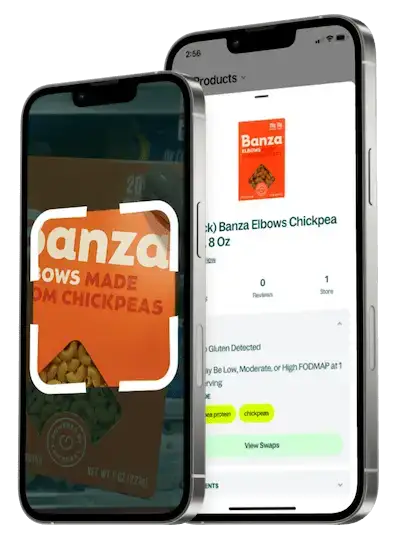
Stop Searching. Start Scanning.
Get instant results with our mobile app
Instant barcode scanning
No typing needed
Multiple diet tracking
Combine as many as you need
Favorite products & lists
Save time on every shop
⭐️⭐️⭐️⭐️⭐️
Join 500,000+ happy shoppers


Free to download • No credit card required
Ingredients
Chicken By-Product Meal, Brewers Rice, Beef Tallow Preserved with Mixed-Tocopherols, Corn Gluten Meal, Animal Liver Flavor, Fish, Natural and Artificial Flavors, Phosphoric Acid, Calcium Carbonate, Brewers Dried Yeast, Salt, Cheese Powder (Source of Cheddar Cheese Flavor), Choline Chloride, Added Color, Minerals [Zinc Sulfate, Ferrous Sulfate, Manganese Sulfate, Copper Sulfate, Calcium Iodate, Sodium Selenite], Taurine, L-Ascorbyl-2-Polyphosphate (Source of Vitamin C), Vitamins [Vitamin E Supplement, Niacin (Vitamin B-3), Vitamin A Supplement, Calcium Pantothenate (Vitamin B-5), Thiamine Mononitrate (Vitamin B-1), Riboflavin Supplement (Vitamin B-2), Vitamin B-12 Supplement, Pyridoxine Hydrochloride (Vitamin B-6), Folic Acid (Vitamin B-9), Vitamin D-3 Supplement, Biotin (Vitamin B-7), Menadione Sodium Bisulfite Complex (Vitamin K)], Yellow 5, Citric Acid, Yellow 6, Red 40, Blue 2, BHA (a Preservative), BHT (a Preservative). Chicken By-Product Meal, Brewers Rice, Beef Tallow Preserved With Mixed-Tocopherols, Corn Gluten Meal, Animal Liver Flavor, Fish, Natural And Artificial Flavors, Phosphoric Acid, Calcium Carbonate, Brewers Dried Yeast, Salt, Cheese Powder (Source Of Cheddar Cheese Flavor), Choline Chloride, Added Color, Minerals [Zinc Sulfate, Ferrous Sulfate, Manganese Sulfate, Copper Sulfate, Calcium Iodate, Sodium Selenite], Taurine, L-Ascorbyl-2-Polyphosphate (Source Of Vitamin C), Vitamins [Vitamin E Supplement, Niacin (Vitamin B-3), Vitamin A Supplement, Calcium Pantothenate (Vitamin B-5), Thiamine Mononitrate (Vitamin B-1), Riboflavin Supplement (Vitamin B-2), Vitamin B-12 Supplement, Pyridoxine Hydrochloride (Vitamin B-6), Folic Acid (Vitamin B-9), Vitamin D-3 Supplement, Biotin (Vitamin B-7), Menadione Sodium Bisulfite Complex (Vitamin K)], Yellow 5, Citric Acid, Yellow 6, Red 40, Blue 2, Bha (A Preservative), Bht (A Preservative). G619418
Stop Searching. Start Scanning.
Get instant results with our mobile app
Instant barcode scanning
No typing needed
Multiple diet tracking
Combine as many as you need
Favorite products & lists
Save time on every shop
⭐️⭐️⭐️⭐️⭐️
Join 500,000+ happy shoppers
Free to download • No credit card required
What is a Gluten Free diet?
A gluten-free diet excludes all foods containing gluten, a protein found in wheat, barley, rye, and their derivatives. It's essential for people with celiac disease, gluten intolerance, or wheat allergy, as consuming gluten can trigger inflammation and digestive issues. Common gluten-containing foods include bread, pasta, cereals, and baked goods, though many gluten-free alternatives now exist using rice, corn, or almond flour. Beyond medical necessity, some people choose a gluten-free lifestyle for perceived health benefits, though experts emphasize the importance of maintaining a balanced diet rich in fiber, vitamins, and minerals when eliminating gluten-containing grains.