
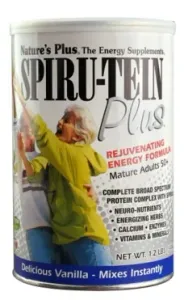
Is Nature's Plus Spiru-Tein Plus® Vanilla Vegetarian?
Scan products instantly
500K+ users • 4.6★ rating


Free download • No credit card
Scan products instantly
500K+ users • 4.6★ rating
Free download • No credit card
Ingredients
Enzyme Complex ( Amylase , Protease , Lipase ) , Marine Aldae Duplex ( Asian Ulva Rigida , Ulva Fasciata ) ( Naturally Rich In : Trace Minerals and Glucuronic Acid ) , Modified Citrus Pectin , Inositol . Phosphatidylserine Complex ( Supplying , Activated Phosphatides , Phosphatidylserine ( Ps ) , Phosphatidylcholine ( Ps ) , Cephalin ( Phosphatidylethanolamine ) , Phosphoinositides ) . English Hawthorn Berry ( Crataegus laevigata ) ( Standardized , 3 . 2% , Vitexin ) . Lactospore ( Microencapsulated Pure Culture Of : B . Coagulans ) , Choline (Bitartrate) . Ginkgo Biloba Leaf ( Standardized , 24% , Ginkgo Flavone-glycosides , 6% , Terpene Lactones ) . Lutein ( Active Carotenoid , from : Marigold Flower Extract ) , Boron ( Citrate ) . Zeaxanthin ( Active Carotenoid , from : Marigold Flower Extract ) . Typical Amino Acid Profile Per Serving ( Isoleucine , Histidine , Leucine , Arginine , Lysine , Aspartic Acid , methionine , Serine , Cysteine , Glutamic Acid , Threonine , Proline , Phenylalanine , Glycine , Tryptophan , Alanine , Valine , Tyrosine ) . Other Ingredients : Non-GMO , Isolated Soy Protein , Fructose , Calcium ( Phosphate ) , Natural Vanilla Flavor , Potassium Citrate , Magnesium Oxide , Modified Citrus Pectin , Marine Algae ( Ulva Rigida , Ulva Fasciata ) , Guar Gum , Psyllium , Oat Bran , Microcrystalline Cellulose , Spirulina , Vitamin C , Vitamin E Acetate , Lipase , Amylase , Protease , Hawthorne Extract , Leci-ps , Choline Bitartrate , Inositol , Biotin , Lactospore , Apple Pectin , Bee Pollen , Niacinamide , Vitamin A Palmitate , Zinc Oxide , Manganese Sulfate , Ferrous Fumarate , Pantothenic Acid , Ginkgo Biloba Extract , Lecithin , Bioflavonoids , Boron Citrate , Marigold Extract , Papaya Fruit , Bromelain ( , from : Pineapple Fruit ) , Chlorophyll , Pyridoxine HCl , Riboflavin , Thiamine HCL , Vitamin B12 , Calciferol , Folic Acid , Potassium Iodide , Chromium Chloride , Sodium Selenite , Sodium Molybdate .
What is a Vegetarian diet?
A vegetarian diet eliminates meat, poultry, and fish but typically includes dairy, eggs, and plant-based foods. People adopt it for ethical, environmental, or health reasons. This diet emphasizes fruits, vegetables, legumes, grains, nuts, and seeds as key nutrient sources. Vegetarians often get protein from eggs, tofu, beans, and lentils. It can offer health benefits such as reduced risk of heart disease and improved weight management, though attention should be given to nutrients like iron, zinc, and vitamin B12. With proper planning, a vegetarian diet can be both nutritionally complete and sustainable.
Explore other diets
Often paired with Vegetarian
No. This product is not vegan as it lists 4 ingredients that derive from animals and 26 ingredients could could derive from animals depending on the source. We recommend contacting the manufacturer directly to confirm.
Details →Yes! We believe this product is dairy free as there are no dairy ingredients listed on the label.
Details →Similar Products
About this product
Supplement · Powder